
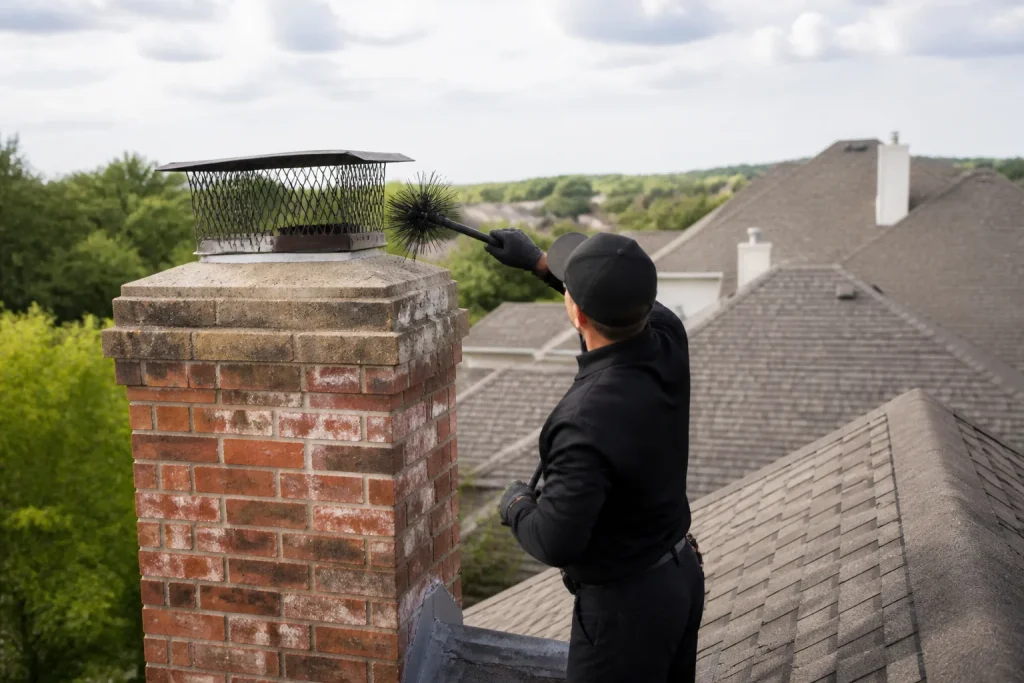
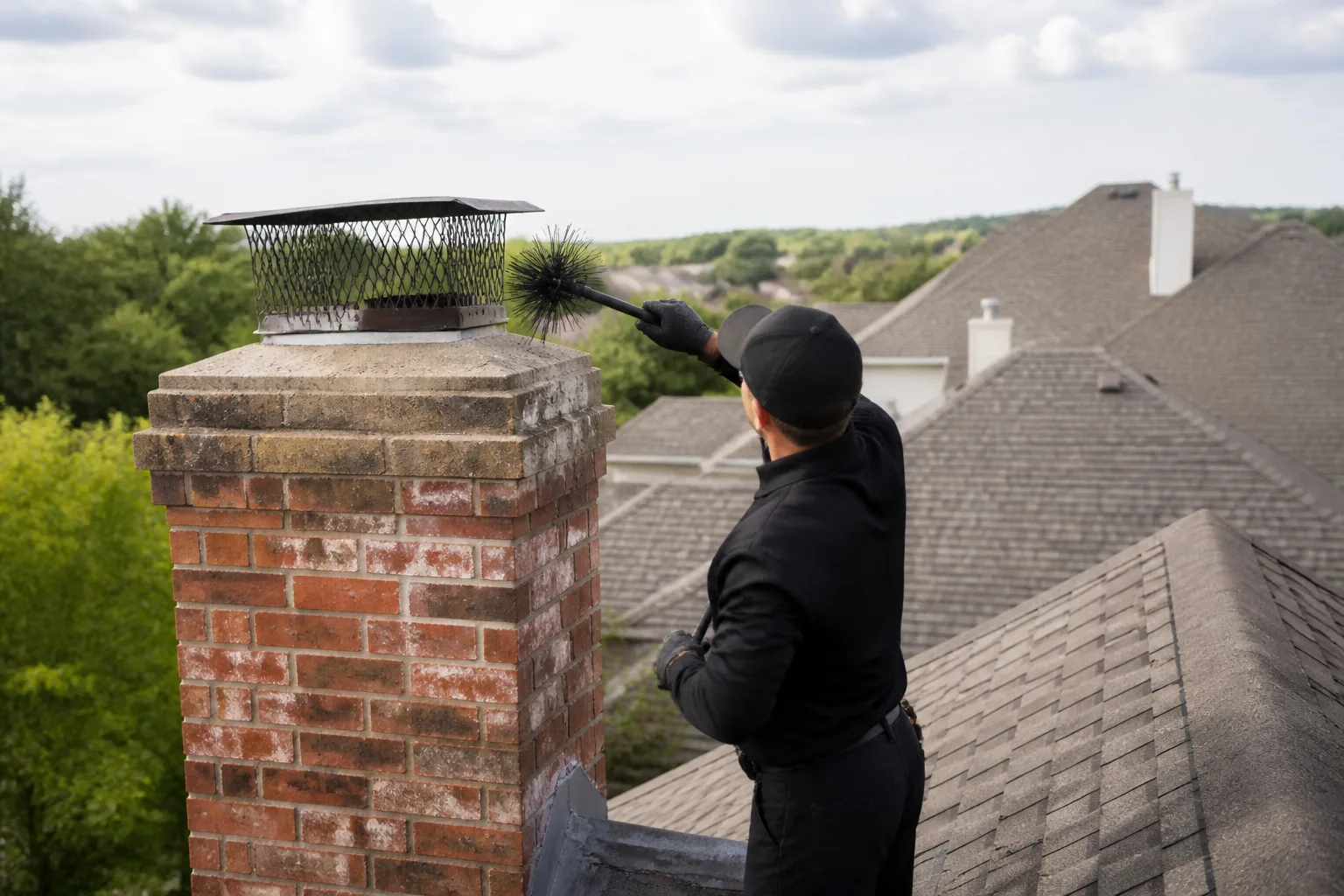
Chimney Sweep: Repair or Replace? How Far North Dallas Homeowners Decide
Most people assume a chimney’s age drives the repair-or-replace call. It usually doesn’t. A 30-year-old chimney in Far North Dallas with a cracked cap and some surface spalling might need a few hundred dollars in targeted work, while a 12-year-old chimney with a deteriorated liner can run into the thousands. The real question isn’t how old the system is. It’s which components have failed, what that failure means, and whether a focused repair restores full function or just postpones the same conversation.
If you’d rather have a trained eye look before you spend anything, call (866) 937-8051. We answer 24/7, and the inspection comes first so the recommendation is based on what’s actually there.
How do Far North Dallas homeowners decide between chimney repair and replacement?
You decide by component, not by the chimney as a whole. A chimney system is really several parts stacked together: the cap, the crown, the flue liner, the firebox, and the chase that surrounds everything. Each one has its own repair threshold and its own replacement trigger. Replacing the whole system when only the cap and crown are compromised is the most common oversell in this trade. Treating a failed liner as a minor fix is the most common undersell. The judgment call is figuring out which parts are genuinely done and which still have service life left.
Here in Far North Dallas, we see a lot of homes built in the same broad waves, which means whole neighborhoods tend to hit the same failure points around the same time. That’s useful context, but it’s not a diagnosis. Two houses on the same street can need very different work.
Component by component: which parts have independent repair thresholds?
Each part of the chimney fails on its own schedule, and each has a point where repair stops making sense. Here’s how we think through the major ones in Far North Dallas.
- Cap: The cap sits on top and keeps water and animals out. A rusted or missing cap is one of the cheapest, highest-value repairs you can make. Rusted through or physically gone, it gets replaced, usually with a purpose-engineered unit from a line like Famco or Copperfield rather than an improvised cover. This is almost never a “replace the chimney” situation.
- Crown: The crown is the concrete top surface that sheds water away from the flue. Hairline cracks can often be sealed. A crown that’s cracked through, crumbling, or pulling away from the flue is a repair that protects everything below it, because water running into the chase is what starts bigger problems.
- Liner: The flue liner carries combustion gases up and out. A liner with isolated deterioration can sometimes be restored with HeatShield ceramic resurfacing, a specialist-only product that rebuilds the flue surface without tearing out the chimney. A liner that’s failed broadly, or that’s undersized for the appliance, usually needs a full reline with a flexible system like DuraFlex.
- Firebox: The firebox takes direct heat and is the most abused part of a wood-burning chimney. Cracked firebox brick and deteriorated joints are repairable. A firebox that’s structurally compromised through the surrounding masonry is a bigger conversation.
- Chase: The chase is the outer structure. Cracks here let water in and can signal movement in the masonry. This is where the decision gets serious.
The pattern to notice: the lower and more structural the failure, the more likely it points toward replacement. The higher and more accessory-level the failure, the more likely a targeted repair does the whole job. A chimney sweep isn’t a one-size repair-and-run visit, and chimney cap & crown work is a good example of a repair that solves a real problem for a fraction of a rebuild.
Why do North Texas conditions change the repair-or-replace math?
Local conditions accelerate specific failure modes, and that shifts which parts tend to fail first in Far North Dallas. The clay soils common across this part of Texas swell and shrink with moisture, and that movement translates into small shifts in masonry over time. Cracks that start at the crown or chase often trace back to that settling rather than to anything dramatic. Our summers cycle hot, and that heat cycling works on sealants, mortar joints, and metal components. Winters are mild, which is a genuine advantage, but the extremes on either end still do their work.
What does this mean for your decision? A few things:
- Crown and chase cracks deserve attention earlier here. Because soil movement is a factor, a small crown crack is worth sealing before water gets into the chase and the problem compounds.
- Liner deterioration is often a slow, hidden process. Heat cycling plus normal use wears the flue surface, and you won’t see it from the fireplace. This is exactly why an inspection matters more than a guess based on the chimney’s age.
- A repair that looks “just cosmetic” on the surface may be structural by the time it’s inspected. The reverse is also true. That’s the whole case for looking before deciding.
None of this means every Far North Dallas chimney is in trouble. It means the local conditions should inform how you read a repair quote and what you ask the technician to check.
What should a Level 2 inspection report actually contain?
A report that supports a real repair-or-replace decision should show you the evidence, not just deliver a verdict. If a technician tells you the chimney needs thousands of dollars of liner or masonry work and can’t show you why, that’s not a report, it’s a pitch. The inspection should stand on its own, which is why we treat chimney inspection as its own service rather than a sales step attached to a sweep.
Here’s what to look for in a report that actually helps you decide:
- Component-by-component findings. The cap, crown, liner, firebox, and chase should each get their own condition note, not one blob of “the chimney needs work.”
- Photos of the actual defects. You should be able to look at the image and see the crack, the spalling, or the deteriorated flue surface for yourself.
- Camera inspection of the flue. A trained technician looks up the flue with a camera so the liner condition is documented, not inferred.
- A clear separation of “needs now,” “monitor,” and “cosmetic.” This is the heart of an honest recommendation. Some things can safely wait, and a good report says so.
- Repair options ranked by scope. If a liner can be restored with HeatShield resurfacing rather than fully relined, the report should say so and explain why.
If you’ve been told you need a full rebuild and you haven’t seen this kind of documentation, get a second opinion before you commit. When you’re ready, our chimney sweep and inspection service can document what’s actually there.
How do you compare a repair quote to a replacement quote honestly?
You compare them on cost per year of service life, not on the sticker price. A $2,000 repair that buys you 15 solid years works out to a bit over $130 a year. A $6,000 replacement that buys 30 years is around $200 a year. Suddenly the “cheaper” repair isn’t automatically the better deal, and the “expensive” replacement isn’t automatically the oversell. Run the math on both before you decide.
To do that honestly, you need a few things from each quote:
- A realistic service-life estimate for the repair and for a replacement, given your fuel type and how you use the fireplace. Ask for it in years, not “a long time.”
- The scope written out. A repair quote should say exactly which components it addresses. A replacement quote should say what’s included and what isn’t.
- Whether the repair is a partial fix or a full restoration. Restoring a liner with HeatShield, for example, addresses the liner. It doesn’t fix a failed crown. Make sure you’re comparing like to like.
- What happens if you do nothing. A responsible technician will tell you plainly when work can safely wait and what the consequence of waiting is.
Our technicians have up to 15 years of experience reading these systems, and the answer we give is the one the evidence supports. Sometimes that’s a repair. Sometimes it’s a reline. It’s rarely a full rebuild unless the structural findings back it up.
When is partial replacement the right answer?
Partial replacement is the right answer more often than most homeowners are told. If the failure is confined to one component and the surrounding structure is sound, replacing just that component restores full function without touching the rest. A worn liner gets relined with a flexible DuraFlex system while the firebox and chase stay put. A failed crown gets rebuilt while the flue stays intact. A missing cap gets replaced with a purpose-engineered unit from a recognized line while everything else is left alone.
How do you verify a technician isn’t overselling a full rebuild? A few practical checks:
- Ask what specifically is compromised and what isn’t. If the answer is “the whole chimney,” ask for the photos that prove the chase and firebox are both failed, not just the liner.
- Ask whether a partial repair is available and why it was ruled out. A technician who can’t explain why the smaller repair won’t work is guessing.
- Ask what the partial repair would cost and how long it would last. Even if you go with the bigger job, you now know the alternative was real.
- Look at the materials. A quote naming professional-grade components, like Olympia Chimney or Copperfield for the cap and crown, is a different quote than one with no material specified at all.
One honest note on safety: the liner and flue are the parts where a bad call matters most. A deteriorating liner can let combustion gases and creosote reach places they shouldn’t, and that’s a real hazard, not a sales line. It’s also not something to diagnose by eye from the hearth. If the report shows liner trouble, take it seriously and have a trained professional confirm the right fix. Don’t try to assess or service the flue yourself.
When to call a pro
If you’ve noticed a draft that didn’t used to be there, odors coming from the fireplace when it’s not in use, visible cracks in the crown, a cap that’s rusted or missing, or it’s simply been more than a year since anyone looked, that’s the moment to bring in a trained technician. The earlier a failing component is caught, the more likely a targeted repair is the answer instead of a bigger job. Water getting into a chase through a cracked crown is the kind of thing that’s cheap to stop and expensive to fix later.
Related services in Far North Dallas: for a full sweep and inspection, see our chimney sweep Far North Dallas page. For damage inside the firebox itself, fireplace repair covers what a sweep alone won’t address.
The Bottom Line
The repair-or-replace decision comes down to which components have failed, what failure mode each one represents, and whether a targeted repair restores full function or just delays the same conversation. Age is a weak signal. Evidence is a strong one. In Far North Dallas, the clay soil movement and summer heat cycling mean crown, chase, and liner condition deserve a close look before anyone recommends the big job. Ask for a report with photos, camera findings on the liner, and a clear split between what needs attention now and what can safely wait. If the evidence supports a partial repair, that’s the answer, and you shouldn’t be sold past it.
If you’re in Far North Dallas and need help, Chimney Sweep Far North Dallas offers free estimates – call (866) 937-8051. We answer 24/7, and fast dispatch runs from 7am to 7pm, Sunday through Friday. The estimate is free and the price is set per job by the written estimate, so you’ll know exactly what you’re approving before any work begins.
Key takeaways:
- Decide by component, not by the chimney’s age.
- Cap and crown failures are often inexpensive repairs, not rebuilds.
- A liner that’s failed broadly usually needs a reline; isolated deterioration may be restored with HeatShield resurfacing.
- Compare repair and replacement quotes on cost per year of service life.
- Never approve major liner or masonry work without photo and camera evidence you can see for yourself.
Frequently Asked Questions
It depends on how much of the liner has deteriorated. Isolated surface deterioration can often be restored with HeatShield ceramic resurfacing, which rebuilds the flue lining without tearing out the chimney. A liner that’s failed broadly, or that’s undersized for the appliance, usually needs a full reline with a flexible system like DuraFlex. The only way to know which applies to your Far North Dallas home is a camera inspection that documents the liner condition. Call (866) 937-8051 for an exact quote – estimates are free.
For a wood-burning fireplace in regular use, annual sweeping and inspection is the standard recommendation, because creosote builds up with every fire and you can’t see the accumulation from the hearth. Gas and oil appliances need inspection on a similar cadence even though there’s no creosote to sweep. If it’s been more than a year since anyone looked at your chimney in Far North Dallas, that’s reason enough to book an inspection. Call (866) 937-8051 for an exact quote – estimates are free.
Small failures get bigger, and the ones that matter most are the ones you can’t see. Creosote accumulation in a flue that isn’t swept is a chimney fire risk, and a deteriorating liner can let combustion gases reach places they shouldn’t, which is a carbon monoxide concern. None of that is a reason to panic, but it is a reason not to put off an inspection indefinitely. Catching a cracked crown early is far cheaper than repairing a chase that’s taken on water. Call (866) 937-8051 for an exact quote – estimates are free.
Yes, and it happens regularly. A chimney of that age with a cracked cap and some surface spalling may need only a few hundred dollars in targeted work. The age itself says very little. What matters is the condition of each component, which is what an inspection documents. Call (866) 937-8051 for an exact quote – estimates are free.
We work on the whole chimney system – not just the flue. Whether it’s a sweep, a documented inspection, cap and crown work, or a liner decision, one call covers it, and the recommendation follows the evidence rather than the other way around. A failing cap won’t fix itself, but we promise not to be dramatic about it.
Written by the team at Chimney Sweep Far North Dallas.
Need Chimney Cleaning Help?
Call Chimney Sweep Far North Dallas - the local pro we connect you with is licensed and insured, here with fast help in Far North Dallas.
(866) 937-8051