
Top Signs You Need Chimney Cleaning Service – Don’t Ignore These
The signs that a chimney needs cleaning fall into two groups: what you can see and smell, and what only shows up during an inspection. The first group gets all the attention, and the second is where the real risk sits. A chimney that drafts cleanly, smells fine, and hasn’t given you a moment’s trouble can still hold a cracked flue tile or a layer of glazed creosote that turns the next fire dangerous. In our experience across Far North Dallas, the absence of symptoms is what lulls homeowners into skipping the sweep. If you’d rather have trained eyes on the flue than guess from the living room, call (866) 937-8051.
What are the early signs your chimney needs cleaning?
The earliest reliable signs are creosote buildup you can see at the flue throat, a strong smoky odor on humid days, and a fire that struggles to draw the way it used to. These show up before anything dramatic happens. Most homeowners miss them because each one is easy to explain away: the smell gets blamed on the weather, the weak draft on the wood, the dark coating on “normal use.”
Here’s the short list we’d want any Far North Dallas homeowner to run through before the season starts:
- A dark, textured coating inside the firebox or at the damper – creosote collects first where the smoke slows down.
- A campfire or asphalt smell when it’s humid or rainy – that’s creosote off-gassing, not a phantom draft.
- Smoke rolling into the room when you first light up – sometimes the flue is restricted, sometimes the draw is compromised. Both need a look.
- Blackened or blistered damper hardware – a sign the fire has been running hotter than the flue is handling cleanly.
- Bits of black flake falling into the firebox – glazed creosote shedding off the liner wall.
None of these demand a panic call. All of them deserve a sweep and a look down the flue. The point is that they’re quiet. If you’re waiting for smoke pouring into the room to be your signal, you’ve waited too long.
Why stage two and stage three creosote don’t always warn you
Creosote builds in three stages, and only the first announces itself. Stage one is soot and light flake – it looks like what you’d expect, it brushes off easily, and it’s what most people picture when they think “needs a sweep.” The trouble starts at stage two, and stage two doesn’t look like much from the firebox. It’s a crusty, flaky deposit that’s bonded to the flue wall. Stage three is worse: a hard, glazed shell that’s essentially baked-on fuel, and it burns hot enough to damage the liner and the masonry around it.
Both of those later stages can hide in plain sight. They don’t always smell. They don’t always choke the draft, because a stage-three glaze can sit on the wall of a flue that still draws perfectly well. What they do is sit there accumulating, fire after fire, until the conditions line up for a chimney fire – and that’s not a scenario anyone wants to discover the hard way.
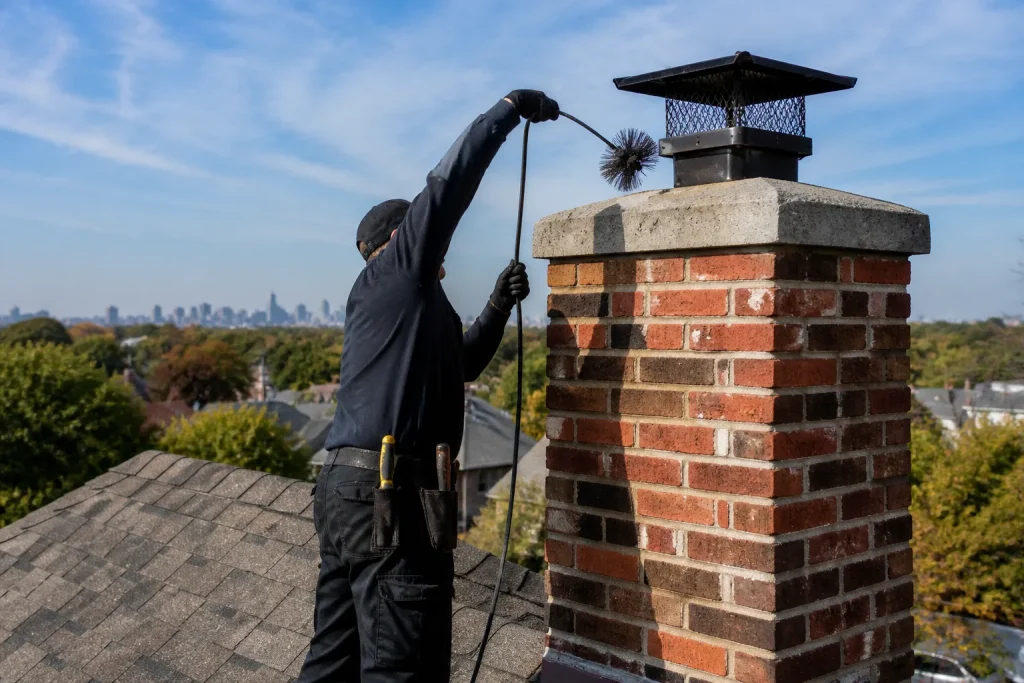
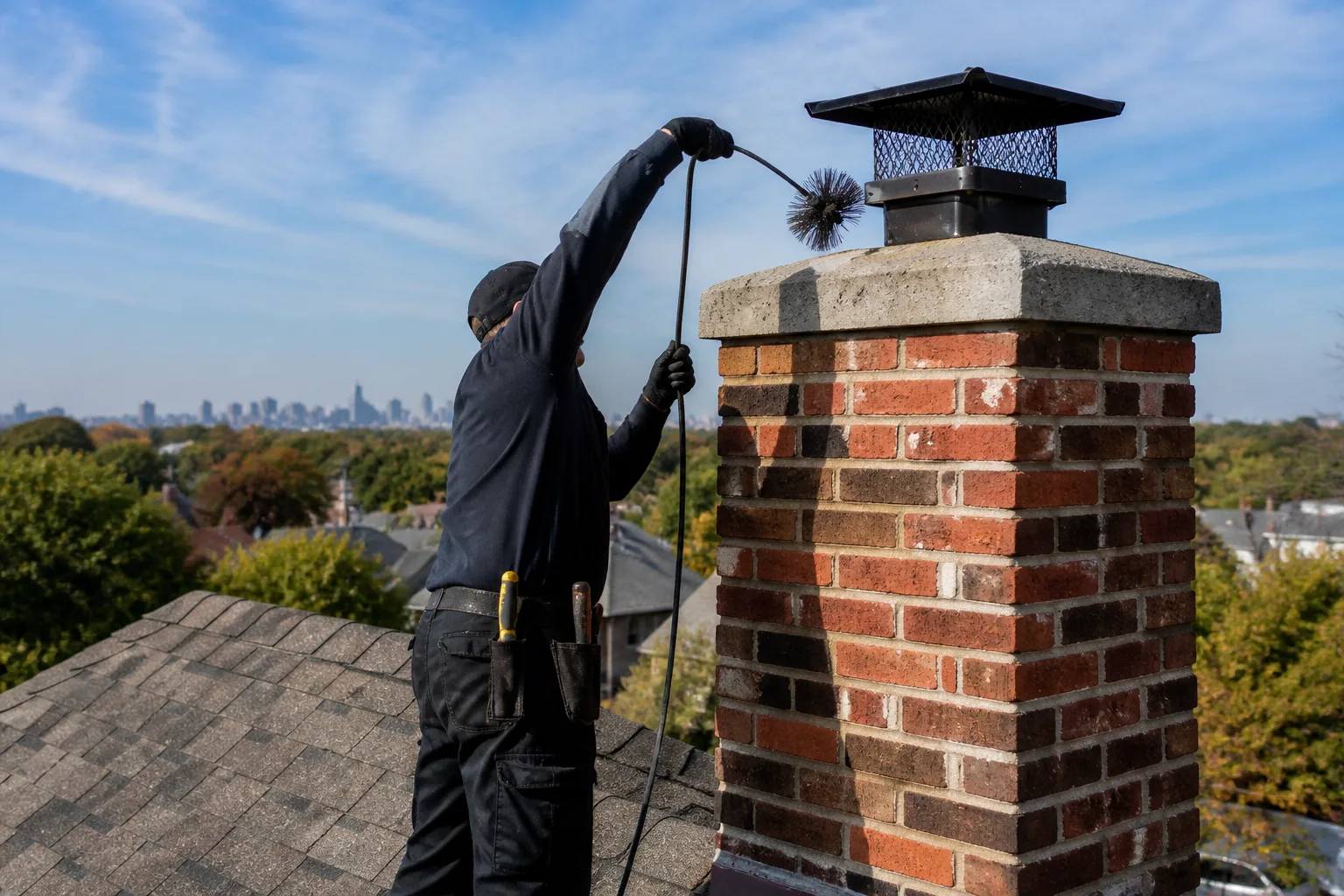
This is why we treat cleaning and inspection as separate services rather than a bundled upsell. A sweep removes what’s there. A Chimney Sweep Far North Dallas inspection tells you what stage you’re at and whether the flue can handle the appliance you’re running. Both matter, and one doesn’t replace the other.
What a “clean-burning” gas fireplace hides in Far North Dallas
A gas fireplace produces almost no creosote, so the assumption is that the chimney behind it never needs attention. That assumption is wrong, and it’s the one we see most often in Far North Dallas homes. Gas burns clean, but it doesn’t eliminate the reasons to inspect the flue.
Gas appliance flues can collect corrosion from exhaust byproducts, and the liner can deteriorate from the inside out with no visible smoke and no familiar chimney smell. Birds and squirrels treat an unused-looking flue as a good nesting spot, and a blocked flue on a gas appliance is a carbon monoxide problem, not a smoke problem. There’s also the venting configuration itself: a gas fireplace conversion or a swapped appliance may be venting through a flue that wasn’t sized or lined for it.
A DuraFlex flexible liner is one of the systems we use to reline a gas flue properly when the existing liner has degraded. The point isn’t that every gas fireplace needs a new liner. It’s that “gas doesn’t make creosote” isn’t the same as “gas doesn’t need a look,” and a flue serving a gas appliance deserves the same inspection schedule as a wood-burning one. Our technicians have up to 15 years of experience reading exactly these situations.
Structural signs you can spot from outside the house
Some of the most important warning signs aren’t inside at all. Walk outside and look up at the chimney crown and the brick below it. In Far North Dallas, the humidity cycles do a slow, patient number on masonry, and the evidence shows up before anything falls apart.
- Cracks in the crown – the crown is the mortar cap on top of the chimney. Hairline cracks let water in, and water in the crown finds its way down into the flue and the masonry.
- Spalling brick – brick faces flaking or popping off. That’s water getting into the brick and pushing out when it expands.
- Efflorescence – the white, chalky staining on brick. It’s salt drawn to the surface by moisture moving through the masonry. A little is cosmetic. A spreading pattern usually means water is getting in somewhere it shouldn’t.
- A missing or improvised cap – a flue with no proper cap is open to rain, animals, and debris.
Efflorescence patterns in North Texas are worth reading carefully, because our swings between humid and dry conditions push moisture through masonry in a way that doesn’t happen in a steadier climate. A purpose-built cap from Famco or Olympia Chimney, properly fitted, closes the most common water entry point. Crown repair and chimney cap & crown work is a core part of what we do, and it starts with looking at the structure, not just the flue.
Does “once a year” actually match your fireplace use?
No single schedule fits every home. “Sweep once a year” is decent default advice, but it’s not tailored to how much you actually burn. A household that lights a fire most nights from November through February builds creosote far faster than one that has a handful of fires over the holidays, and the flue doesn’t know what month it is.
A better way to think about it is by burn volume and burn quality:
- Heavy use (fires most evenings through the season): an annual inspection with a sweep as needed, and a closer look if you’re burning unseasoned wood or running the damper low.
- Moderate use (a few fires a week in season): annual inspection is still the baseline, with cleaning based on what the inspection finds.
- Light or occasional use: annual inspection still holds, because creosote isn’t the only thing an inspection checks. A flue that sat unused all year is a flue that may have picked up a nest or a cracked tile.
Two things push you off the default schedule toward cleaning sooner: burning green or wet wood, and burning with the damper closed down to stretch a fire. Both produce more creosote per fire, and in Far North Dallas, where a lot of firewood sits stacked through humid months, wood that looks dry can still be damp inside. The honest answer to “how often” is “as often as your inspection says,” which is a different answer for every house.
How to read a Level 2 inspection report
A Level 2 inspection is the camera-based look at the flue interior, and the report is where homeowners get lost. Most reports sort findings into “monitor” and “repair now,” and the difference between those two labels is the whole point. Knowing how to read them protects you from being sold work you don’t need.
Monitor means the finding is real but not urgent – a hairline crack, a small area of deterioration, a crown that’s starting to show wear. It gets watched and rechecked, and the work can safely wait. Repair now means the condition compromises safety or will get significantly worse if left: a flue tile with a gap that lets heat reach framing, a stage-three creosote glaze, a crown crack that’s actively letting water in.
Here’s the part that matters most: nothing should be recommended to you without camera evidence you can see yourself. If a report says “liner replacement” and there’s no photo of the problem, ask for one. We use HeatShield ceramic resurfacing where it fits – it restores a deteriorating liner without tearing out the chimney, which is a repair option a lot of general handymen simply can’t offer – and a DuraFlex liner where resurfacing won’t hold. When a finding is a real “monitor,” we’ll tell you so and say plainly that it can wait. That’s how the decision stays yours.
When to call a pro
Any of these is a fair reason to pick up the phone: a chimney that hasn’t been inspected in over a year, a new home you’ve just moved into, visible crown cracks or spalling brick, a strong odor on humid days, or a gas fireplace you’ve never had looked at. A chimney fire risk doesn’t need to be obvious to be real. When you’re ready, call (866) 937-8051. We answer 24/7. Fast dispatch from 7am to 7pm, Sunday through Friday. You can read more about chimney sweep work and what a visit covers.
Related services in Far North Dallas: cleaning, inspection, cap and crown work, and fireplace repair all fall under one roof, so you’re not chasing a second contractor for the structural side.
The Bottom Line
The dangerous chimney problems in Far North Dallas homes are usually the ones without loud symptoms: stage-two and stage-three creosote that doesn’t smell, cracked flue tiles you can’t see from the firebox, and crown and masonry wear that only shows up close. Gas fireplaces still need a look. “Once a year” is a starting point, not a rule, and the right interval depends on how you burn. Read a Level 2 report for the “monitor” versus “repair now” distinction, and don’t accept a recommendation you can’t verify with camera evidence.
We work on the whole chimney system, not just the flue: cleaning, inspection, cap and crown, and structural repair, using professional-grade materials from suppliers like DuraFlex, HeatShield, Famco, and Olympia Chimney rather than hardware-store substitutes. If you’re in Far North Dallas and need help, Chimney Sweep Far North Dallas offers free estimates – call (866) 937-8051. We answer 24/7. Fast dispatch from 7am to 7pm, Sunday through Friday.
Frequently Asked Questions
You know when a sweep and inspection find creosote at stage two or three, a restricted flue, or structural damage. From the living room, look for a dark coating at the damper, a smoky odor on humid days, weak draft, or black flakes in the firebox. Any of those means it’s time to have it checked, not necessarily to assume the worst. Call (866) 937-8051 for an exact quote – estimates are free.
Yes, they need inspection rather than creosote cleaning. Gas burns clean, but the flue can still collect corrosion, blockages from nesting animals, and liner deterioration, and a blocked gas flue is a carbon monoxide risk. A gas appliance deserves the same inspection schedule as a wood-burning one. Call (866) 937-8051 – estimates are free.
Base it on your inspection, not a fixed calendar. Annual inspection is the standard starting point for any fireplace, and cleaning frequency depends on how much you burn and how well your wood burns. Heavy use and damp wood push you toward cleaning sooner. Call (866) 937-8051 for an exact quote – estimates are free.
Creosote keeps building, and stage-three glazed creosote can fuel a chimney fire that damages the liner and the masonry. Skipping also lets a small crown crack or a hairline flue tile turn into water damage and a bigger repair. None of that is a reason to panic, but it is a reason to get an inspection on the books. Call (866) 937-8051 – estimates are free.
Written by the team at Chimney Sweep Far North Dallas.
Need Chimney Cleaning Help?
Call Chimney Sweep Far North Dallas - the local pro we connect you with is licensed and insured, here with fast help in Far North Dallas.
(866) 937-8051